Minggu, 04 November 2012

[V755.Ebook] Ebook Download Executive Function in Preschool- Age Children: Integrating Measurement, Neurodevelopment, and Translational Research, by Edited

Ebook Download Executive Function in Preschool- Age Children: Integrating Measurement, Neurodevelopment, and Translational Research, by Edited

Executive Function In Preschool- Age Children: Integrating Measurement, Neurodevelopment, And Translational Research, By Edited. One day, you will certainly uncover a new experience and knowledge by investing even more cash. But when? Do you think that you require to obtain those all needs when having much cash? Why don't you attempt to obtain something basic initially? That's something that will lead you to understand more regarding the world, adventure, some locations, past history, entertainment, and much more? It is your very own time to continue checking out routine. Among the books you can appreciate now is Executive Function In Preschool- Age Children: Integrating Measurement, Neurodevelopment, And Translational Research, By Edited here.

Executive Function in Preschool- Age Children: Integrating Measurement, Neurodevelopment, and Translational Research, by Edited

Executive Function in Preschool- Age Children: Integrating Measurement, Neurodevelopment, and Translational Research, by Edited


Executive Function in Preschool- Age Children: Integrating Measurement, Neurodevelopment, and Translational Research, by Edited

Ebook Download Executive Function in Preschool- Age Children: Integrating Measurement, Neurodevelopment, and Translational Research, by Edited

New upgraded! The Executive Function In Preschool- Age Children: Integrating Measurement, Neurodevelopment, And Translational Research, By Edited from the best writer and also author is currently readily available here. This is guide Executive Function In Preschool- Age Children: Integrating Measurement, Neurodevelopment, And Translational Research, By Edited that will make your day reading comes to be finished. When you are seeking the printed book Executive Function In Preschool- Age Children: Integrating Measurement, Neurodevelopment, And Translational Research, By Edited of this title in the book store, you may not locate it. The troubles can be the limited versions Executive Function In Preschool- Age Children: Integrating Measurement, Neurodevelopment, And Translational Research, By Edited that are given up the book store.

If you ally require such a referred Executive Function In Preschool- Age Children: Integrating Measurement, Neurodevelopment, And Translational Research, By Edited book that will offer you worth, obtain the most effective seller from us now from lots of preferred authors. If you wish to amusing books, lots of stories, story, jokes, and also more fictions collections are additionally released, from best seller to the most current launched. You may not be confused to appreciate all book collections Executive Function In Preschool- Age Children: Integrating Measurement, Neurodevelopment, And Translational Research, By Edited that we will certainly supply. It is not about the prices. It has to do with just what you require now. This Executive Function In Preschool- Age Children: Integrating Measurement, Neurodevelopment, And Translational Research, By Edited, as one of the very best sellers right here will be among the best options to check out.

Locating the ideal Executive Function In Preschool- Age Children: Integrating Measurement, Neurodevelopment, And Translational Research, By Edited publication as the right need is kind of lucks to have. To begin your day or to end your day in the evening, this Executive Function In Preschool- Age Children: Integrating Measurement, Neurodevelopment, And Translational Research, By Edited will certainly appertain enough. You can merely look for the floor tile here and you will certainly obtain the book Executive Function In Preschool- Age Children: Integrating Measurement, Neurodevelopment, And Translational Research, By Edited referred. It will not bother you to reduce your important time to choose shopping book in store. In this way, you will certainly likewise invest cash to pay for transport and also other time invested.

By downloading and install the online Executive Function In Preschool- Age Children: Integrating Measurement, Neurodevelopment, And Translational Research, By Edited publication here, you will get some advantages not to go with guide store. Simply connect to the internet and begin to download and install the page web link we discuss. Now, your Executive Function In Preschool- Age Children: Integrating Measurement, Neurodevelopment, And Translational Research, By Edited prepares to enjoy reading. This is your time and your serenity to obtain all that you want from this book Executive Function In Preschool- Age Children: Integrating Measurement, Neurodevelopment, And Translational Research, By Edited

Executive Function in Preschool- Age Children: Integrating Measurement, Neurodevelopment, and Translational Research, by Edited

A primary aim of the neuropsychological revolution has been the mapping of what has come to be known as executive function. This term encompasses a range of mental processes such as working memory, inhibitory control, and cognitive flexibility that, together, regulate our social behavior, and our emotional and cognitive well-being.

In this book, top scientists from a variety of fields investigate executive function as it develops in early childhood. Because researchers differ in how they conceptualize basic processes and even in how they define EF itself, contributors begin by discussing comparability and replicability, key issues of primary importance to those seeking to move the field to a new level of rigor. Next, they tackle the nuts-and-bolts of the development of EF in preschoolers, including the neurobiological mechanisms and circuitry that underlie EF development as well as the role of EF in assessing risk-- and its counterpart, resilience. Finally, they highlight exciting new clinical applications of EF research, including the use of EF in contextualizing and assessing family risk, the impact of socioeconomic status on neurological development, and the promotion of EF development through early education programs.

  • Sales Rank: #573019 in Books
  • Published on: 2015-12-15
  • Original language: English
  • Number of items: 1
  • Dimensions: 10.20" h x .90" w x 7.30" l, .0 pounds
  • Binding: Hardcover
  • 352 pages

Most helpful customer reviews

See all customer reviews...

Executive Function in Preschool- Age Children: Integrating Measurement, Neurodevelopment, and Translational Research, by Edited PDF
Executive Function in Preschool- Age Children: Integrating Measurement, Neurodevelopment, and Translational Research, by Edited EPub
Executive Function in Preschool- Age Children: Integrating Measurement, Neurodevelopment, and Translational Research, by Edited Doc
Executive Function in Preschool- Age Children: Integrating Measurement, Neurodevelopment, and Translational Research, by Edited iBooks
Executive Function in Preschool- Age Children: Integrating Measurement, Neurodevelopment, and Translational Research, by Edited rtf
Executive Function in Preschool- Age Children: Integrating Measurement, Neurodevelopment, and Translational Research, by Edited Mobipocket
Executive Function in Preschool- Age Children: Integrating Measurement, Neurodevelopment, and Translational Research, by Edited Kindle

Executive Function in Preschool- Age Children: Integrating Measurement, Neurodevelopment, and Translational Research, by Edited PDF

Executive Function in Preschool- Age Children: Integrating Measurement, Neurodevelopment, and Translational Research, by Edited PDF

Executive Function in Preschool- Age Children: Integrating Measurement, Neurodevelopment, and Translational Research, by Edited PDF

Kamis, 01 November 2012

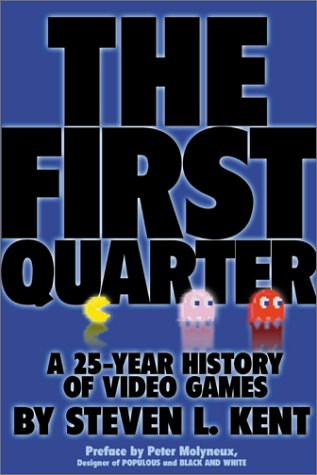
[K828.Ebook] Download The First Quarter : A 25-year History of Video Games, by Steven L. Kent

Download The First Quarter : A 25-year History of Video Games, by Steven L. Kent

In some cases, reading The First Quarter : A 25-year History Of Video Games, By Steven L. Kent is really monotonous and it will certainly take long period of time starting from getting guide as well as begin checking out. However, in modern-day age, you could take the creating innovation by utilizing the internet. By net, you could see this web page and also start to look for guide The First Quarter : A 25-year History Of Video Games, By Steven L. Kent that is required. Wondering this The First Quarter : A 25-year History Of Video Games, By Steven L. Kent is the one that you require, you could opt for downloading. Have you recognized ways to get it?

The First Quarter : A 25-year History of Video Games, by Steven L. Kent

The First Quarter : A 25-year History of Video Games, by Steven L. Kent


The First Quarter : A 25-year History of Video Games, by Steven L. Kent

Download The First Quarter : A 25-year History of Video Games, by Steven L. Kent

The First Quarter : A 25-year History Of Video Games, By Steven L. Kent. A job might obligate you to constantly improve the understanding as well as encounter. When you have no adequate time to boost it straight, you can get the encounter and also knowledge from checking out the book. As everyone understands, book The First Quarter : A 25-year History Of Video Games, By Steven L. Kent is very popular as the home window to open up the globe. It implies that reading book The First Quarter : A 25-year History Of Video Games, By Steven L. Kent will certainly provide you a new way to discover every little thing that you need. As guide that we will offer below, The First Quarter : A 25-year History Of Video Games, By Steven L. Kent

Why must be book The First Quarter : A 25-year History Of Video Games, By Steven L. Kent Publication is one of the simple sources to try to find. By getting the writer as well as style to get, you can find many titles that available their data to acquire. As this The First Quarter : A 25-year History Of Video Games, By Steven L. Kent, the inspiring publication The First Quarter : A 25-year History Of Video Games, By Steven L. Kent will certainly provide you exactly what you have to cover the task deadline. And why should be in this web site? We will certainly ask initially, have you a lot more times to choose shopping guides and also hunt for the referred book The First Quarter : A 25-year History Of Video Games, By Steven L. Kent in publication shop? Many individuals might not have sufficient time to find it.

For this reason, this website offers for you to cover your problem. We show you some referred publications The First Quarter : A 25-year History Of Video Games, By Steven L. Kent in all kinds as well as themes. From common writer to the popular one, they are all covered to supply in this site. This The First Quarter : A 25-year History Of Video Games, By Steven L. Kent is you're hunted for publication; you simply have to visit the link page to receive this site then choose downloading. It will certainly not take often times to get one publication The First Quarter : A 25-year History Of Video Games, By Steven L. Kent It will depend upon your internet connection. Merely acquisition and also download the soft documents of this publication The First Quarter : A 25-year History Of Video Games, By Steven L. Kent

It is so simple, right? Why don't you try it? In this site, you can likewise locate other titles of the The First Quarter : A 25-year History Of Video Games, By Steven L. Kent book collections that may have the ability to assist you locating the best remedy of your task. Reading this publication The First Quarter : A 25-year History Of Video Games, By Steven L. Kent in soft documents will likewise relieve you to get the resource effortlessly. You might not bring for those books to somewhere you go. Just with the gadget that consistently be with your anywhere, you can read this book The First Quarter : A 25-year History Of Video Games, By Steven L. Kent So, it will certainly be so quickly to complete reading this The First Quarter : A 25-year History Of Video Games, By Steven L. Kent

The First Quarter : A 25-year History of Video Games, by Steven L. Kent

The First Quarter: A 25-year History of Video Games is an insider's look at the entertainment novelty that drove the evolution of high-technology. The book was compiled from more than 500 first-hand interviews with such people as Nolan Bushnell (founder of Atari), Shigeru Miyamoto (creator of Donkey Kong), Toru Iwatani (designer of Pac-Man), etc.

Above all, this book provides an intimate look into the lives of a group of brilliant and quirky people, and the sometimes serious and sometimes wacky way they ran their business.

  • Sales Rank: #516751 in Books
  • Brand: Brand: B W D Pr
  • Published on: 2001-09-25
  • Ingredients: Example Ingredients
  • Original language: English
  • Number of items: 1
  • Binding: Paperback
  • 466 pages
Features
  • Used Book in Good Condition

Review
"...the best video game history book I've ever come across...a definitive overview of how it all started." -- John Romero, Founder of Ion Storm

From the Publisher
Review from Next Generation Magazine

"Ok, we admit we're biased. Like most NEXT GEN readers, we've been waiting for years to get our hands on Kent's opus -- the entire history of the videogame industry, writ large through the words of the men and women who created it. Can such an anticipated book possibly live up to our expectations? In a word, yes.

The result of more than 500 interviews (he failed to bag only Yamauchi, Kuturagi, and Sam Tramiel) and years of research, the book delivers an authoritative yet personal view of the game industry, packed with great quotes and anecdotes. While some of the book will be well known (especially to readers of Next Gen), frequently the book exposes totally new (and fascinating) behind-the-scenes secrets. More than that though, it delivers the personal stories behind the facts, brining you the faces behind the games, and giving you a feel for what it's like to work with those people.

If Phoenix is the game industry's textbook, this is its unauthorized biography. Both books are great on their own, but they also complement each other amazingly well -- reading one makes you want to reread the other immediately.

We did have a few quibbles with The first Quarter. Frequently the text is too wordy, and several times we felt Steve was devoting too much space to minor issues that weren't worth it -- like a multi-page anecdote about Nintendo buying the Mariners --or glossing over bits we wanted to hear more on. (Sega's famous "Sega Scream" campaign gets far less ink than their nearly forgotten "Sega does what Ninten-don't" ads.) Those issues aside, though, this book is a major triumph, destined to stand with Hackers, Game Over, and Phoenix as "must reads" for anyone who cares about the game industry."
--Chris Charla

*

Selected by the DigiPen Institute of Technology, the only school offering degrees in video game creation, as a textbook for the Game150 class.

About the Author
Steven L. Kent writes about interactive entertainment for MSNBC, USA Today, Delta Sky, Access, Chicago Tribune, Next Generation, and several other publications.

Most helpful customer reviews

0 of 0 people found the following review helpful.
Grand, sweeping epic on the birth of video games.
By John IV
Steven Kent's labor of love is an excellent, sweeping overview of the birth and rise of the video game industry. This appreciative 32 year old was there for the Bronze and Golden Age of the arcade heyday, cutting my teeth on Firetruck and being swept away in turn by Space Invaders, Asteroids, and Donkey Kong. I groaned when my dad brought home an Intellivision when I wanted a VCS, and the neighbor kid was the only one around w/ a Bally Astrocade. Like many others, I read bits and pieces of Steven's book when it was partially serialized in Next Gen. magazine [often it was the only thing worthwhile in there, but anyhow] and was pleased to get my hands on the finished product. I chuckled when I read another reviewer mention it was a page turner, but that's exactly how it turned out. Going all the way back to pinball and then to the forgotten fathers, he examines interactive digital entertainment's humble beginnings. The reading is somewhat disjointed and non-linear as many of the events and timelines overlap, when one story is completed, another starts back at the beginning. I was especially fascinated by the often incestuous job hopping of some of the major protagonists, as they would leave Atari for instance, create a new third-party software house, then be hired by a competitor, then a next gen usurper. The beginnings of Atari often provided the most rollicking stories, I got a kick out of reading about the early employees who often carried a hatchet with them on their arcade routes just in case they were jumped. As the arcade scene waned, the home consoles rose in power and stature. Atari, Intellivision, Colecovision consoles overlapped the arcade pinnacle, eventually begetting Nintendo, Sega, 3DO, and Sony offerings. Through it all Kent ties in the threads of the men who created these and moved throughout the industry, numerous interviews highlight their place in this blossoming field. Further, as a NW native, I was pleased to see the included side-bar about Nintendo swooping in and saving our Seattle Mariners from the brink. This is an excellent companion and supplement to the existing free open-source documentation/preservation projects that are proceeding apace on the web. These emulators allow users of the original media to play back any of the games original code on their PCs. The largest and most influential of these is M.A.M.E, the multi-arcade-machine-emulator. Currently, Mame supports close to 3000 arcade games via their rom images, going all the way back to 1975's Gun Fight, the first microprocessor game, an 8080 running at 2MHz. Mame's point is to provide a documentation of the hardware of these games, which could be lost to time. Unlike commercial offerings, it intends to document *all* games, not just the hits. When Kent talked about Toru Iwatani, the designer of Pac-Man, he mentioned that Iwatani wanted to do pinball games at first, and that Namco allowed him to do some pseudo-pinball games as a compromise. I knew at once through Mame that they were the Cutie-Q, Bombbee series. There are emulators for just about every console mentioned by Kent too, from Dan Boris' Odyssey emulator, to Stella/Z26 for VCS, to Bliss for Intellivision and on and on. Being able to play the games of our collective childhood's sparked the retrogaming revolution, and Kent's book provides a great historical background for those interested in the history side of things. Additionally, w/ the creation of Visual Pinball by Randy Davis, a great number of the best tables of all time have been recreated and are only a click away. Kent talked about Ballyhoo as the first commercially viable table, and VPinball has it. I really enjoyed the book, from its humble beginnings and stories of Nolan's jacuzzi parties to multi-million dollar product launches, the industry has come a long, long way in merely 25 years. Highly recommended. For further arcade game history, also see Mame's history.dat file, initially compiled by Brian Deuel, and currently maintained at sys2064.com.

1 of 1 people found the following review helpful.
A "Behind the music" for the Video game industry
By Matthew Dovell
This book takes a interesting perspective on the video game industry. If the book Phoenix by Leonard Herman is like an chronological history than this one is like Behind the Music.
Steven Kent goes more on a personal level with programmers and CEO'S both current and former ones. Going this way puts more of an emotional spin as to the maturity of the industry. To put a perspective he goes more into the "Why" of they ways things happened.
Some have commented of some grammar errors and there is a few but they forgot that this is the FIRST VERSION so naturally some can be expected.
What I would like to see for the next version (if he's reading is the following) an index, more pictures (maybe some game shots, building shots etc color maybe as well), maybe a bit on the decline of arcades (it was touched upon by Williams buying Atari Games), maybe a listing of a graph of some sorts (flowchart like) of what company came from where (Activision from Atari, Electronic arts from Apple, 3do from Electronic arts etc) and what companies release what system(s).
I look forward to the next version and Mr. Kents new book coming out in a month or so. This one is highly recommended

1 of 1 people found the following review helpful.
The Definitive History of Video Games
By Brian A. Wolters
The First Quarter: A 25-year History of Video Games is an extremely interesting book, if you are curious at all about the dawn of video games. I myself am a big fan of older video game systems. Being an owner of Atari, Intellivision and Colecovision, I really would give anything to relive those great days in the early 80's. This book helped me do that.
Much of the books deals with the true "father of video games," Nolan Bushnell. In this book, you will see how Nolan was pushed around in the name of sales. You will also learn that he invented the Chuck E Cheese Corporation. It book also covers the "dark days" during the first video game crash. This was indeed a dark time where people were turning to their Commodore 64's and leaving their old consoles to collect dust.
I also enjoyed following the Atari saga. You will read that Atari attempted to make several comebacks only to fail due to poor marketing. Just imagine if Atari had stayed in top. What would the world of video games be like today?
If you even have a passing interest in how video games got started, this is the book to have.

See all 35 customer reviews...

The First Quarter : A 25-year History of Video Games, by Steven L. Kent PDF
The First Quarter : A 25-year History of Video Games, by Steven L. Kent EPub
The First Quarter : A 25-year History of Video Games, by Steven L. Kent Doc
The First Quarter : A 25-year History of Video Games, by Steven L. Kent iBooks
The First Quarter : A 25-year History of Video Games, by Steven L. Kent rtf
The First Quarter : A 25-year History of Video Games, by Steven L. Kent Mobipocket
The First Quarter : A 25-year History of Video Games, by Steven L. Kent Kindle

The First Quarter : A 25-year History of Video Games, by Steven L. Kent PDF

The First Quarter : A 25-year History of Video Games, by Steven L. Kent PDF

The First Quarter : A 25-year History of Video Games, by Steven L. Kent PDF

[A180.Ebook] Download Ebook The Great Influenza: The Story of the Deadliest Pandemic in History, by John M. Barry

Download Ebook The Great Influenza: The Story of the Deadliest Pandemic in History, by John M. Barry

Discover the strategy of doing something from several sources. One of them is this book qualify The Great Influenza: The Story Of The Deadliest Pandemic In History, By John M. Barry It is an effectively known book The Great Influenza: The Story Of The Deadliest Pandemic In History, By John M. Barry that can be suggestion to check out now. This suggested book is one of the all excellent The Great Influenza: The Story Of The Deadliest Pandemic In History, By John M. Barry collections that are in this site. You will additionally discover other title and also themes from different authors to browse below.

The Great Influenza: The Story of the Deadliest Pandemic in History, by John M. Barry

The Great Influenza: The Story of the Deadliest Pandemic in History, by John M. Barry


The Great Influenza: The Story of the Deadliest Pandemic in History, by John M. Barry

Download Ebook The Great Influenza: The Story of the Deadliest Pandemic in History, by John M. Barry

The Great Influenza: The Story Of The Deadliest Pandemic In History, By John M. Barry. Eventually, you will certainly uncover a new journey as well as understanding by investing more cash. However when? Do you think that you have to get those all needs when having much cash? Why don't you attempt to get something easy initially? That's something that will lead you to recognize even more regarding the world, experience, some places, past history, amusement, and a lot more? It is your very own time to continue reading practice. Among the books you can appreciate now is The Great Influenza: The Story Of The Deadliest Pandemic In History, By John M. Barry right here.

Often, reviewing The Great Influenza: The Story Of The Deadliest Pandemic In History, By John M. Barry is extremely uninteresting and also it will certainly take very long time beginning with obtaining the book and start reading. Nonetheless, in modern era, you could take the establishing modern technology by utilizing the net. By web, you can see this web page as well as begin to hunt for guide The Great Influenza: The Story Of The Deadliest Pandemic In History, By John M. Barry that is needed. Wondering this The Great Influenza: The Story Of The Deadliest Pandemic In History, By John M. Barry is the one that you require, you could opt for downloading and install. Have you recognized ways to get it?

After downloading and install the soft documents of this The Great Influenza: The Story Of The Deadliest Pandemic In History, By John M. Barry, you can start to review it. Yeah, this is so satisfying while somebody needs to review by taking their big books; you remain in your brand-new method by only manage your gizmo. Or even you are operating in the workplace; you can still make use of the computer to check out The Great Influenza: The Story Of The Deadliest Pandemic In History, By John M. Barry totally. Certainly, it will not obligate you to take several web pages. Merely web page by page relying on the time that you have to review The Great Influenza: The Story Of The Deadliest Pandemic In History, By John M. Barry

After recognizing this quite simple way to read and get this The Great Influenza: The Story Of The Deadliest Pandemic In History, By John M. Barry, why do not you tell to others concerning this way? You could inform others to visit this internet site and choose searching them favourite publications The Great Influenza: The Story Of The Deadliest Pandemic In History, By John M. Barry As understood, right here are lots of listings that supply lots of sort of books to accumulate. Simply prepare couple of time and also web links to get the books. You could actually delight in the life by reviewing The Great Influenza: The Story Of The Deadliest Pandemic In History, By John M. Barry in an extremely easy way.

The Great Influenza: The Story of the Deadliest Pandemic in History, by John M. Barry

At the height of WWI, history’s most lethal influenza virus erupted in an army camp in Kansas, moved east with American troops, then exploded, killing as many as 100 million people worldwide. It killed more people in twenty-four months than AIDS killed in twenty-four years, more in a year than the Black Death killed in a century. But this was not the Middle Ages, and 1918 marked the first collision of science and epidemic disease. Magisterial in its breadth of perspective and depth of research and now revised to reflect the growing danger of the avian flu, The Great Influenza is ultimately a tale of triumph amid tragedy, which provides us with a precise and sobering model as we confront the epidemics looming on our own horizon. John M. Barry has written a new afterword for this edition that brings us up to speed on the terrible threat of the avian flu and suggest ways in which we might head off another flu pandemic.

  • Sales Rank: #21376 in Books
  • Brand: Barry, John M.
  • Published on: 2005-10-04
  • Released on: 2005-10-04
  • Original language: English
  • Number of items: 1
  • Dimensions: 8.37" h x 1.18" w x 5.45" l, 1.15 pounds
  • Binding: Paperback
  • 546 pages
Features
  • Great book!

From Publishers Weekly
In 1918, a plague swept across the world virtually without warning, killing healthy young adults as well as vulnerable infants and the elderly. Hospitals and morgues were quickly overwhelmed; in Philadelphia, 4,597 people died in one week alone and bodies piled up on the streets to be carted off to mass graves. But this was not the dreaded Black Death-it was "only influenza." In this sweeping history, Barry (Rising Tide) explores how the deadly confluence of biology (a swiftly mutating flu virus that can pass between animals and humans) and politics (President Wilson's all-out war effort in WWI) created conditions in which the virus thrived, killing more than 50 million worldwide and perhaps as many as 100 million in just a year. Overcrowded military camps and wide-ranging troop deployments allowed the highly contagious flu to spread quickly; transport ships became "floating caskets." Yet the U.S. government refused to shift priorities away from the war and, in effect, ignored the crisis. Shortages of doctors and nurses hurt military and civilian populations alike, and the ineptitude of public health officials exacerbated the death toll. In Philadelphia, the hardest-hit municipality in the U.S., "the entire city government had done nothing" to either contain the disease or assist afflicted families. Instead, official lies and misinformation, Barry argues, created a climate of "fear... [that] threatened to break the society apart." Barry captures the sense of panic and despair that overwhelmed stricken communities and hits hard at those who failed to use their power to protect the public good. He also describes the work of the dedicated researchers who rushed to find the cause of the disease and create vaccines. Flu shots are widely available today because of their heroic efforts, yet we remain vulnerable to a virus that can mutate to a deadly strain without warning. Society's ability to survive another devastating flu pandemic, Barry argues, is as much a political question as a medical one.
Copyright � Reed Business Information, a division of Reed Elsevier Inc. All rights reserved.

From The New England Journal of Medicine
The connection among public health, epidemic disease, and politics can be seen throughout history, from the responses to the Black Death in Italian cities in 1348 to the response -- or lack thereof -- to the resurgence of tuberculosis on the part of the New York City Department of Health in the 1980s. John M. Barry spells out this connection in fascinating detail in The Great Influenza. In his meticulous description of the dire consequences that resulted when short-term political expediency trumped the health of the public during the 1918 influenza pandemic, Barry reminds his readers that the government response to an epidemic is all too often colored by the politics of the moment. Barry is neither a scientist nor a professional historian, and some of the details he gives on virology and immunology are clearly targeted at a nonmedical audience, but physicians and scientists will find this book engrossing nonetheless. The influenza pandemic of 1918, the worst pandemic in history, killed more people than died in World War I and more than the tens of millions who have died, to date, in the AIDS pandemic. Barry focuses only on what was occurring in the United States at the time, and he tries to place this unprecedented human disaster both against the background of American history and within the context of the history of medicine. He is right to try to acquaint the reader with the state of American medicine at the turn of the last century, focusing on the dismal status of medical education and laboratory research, particularly as compared with that in Europe at the same time. Much of his discussion centers on "great men" (and an occasional great woman), however, and the picture given of their lives and professional careers is superficial and occasionally repetitious, and it distracts from the main events. His point, presumably, is to convey the futility of all the efforts of these brilliant minds, and he begins and ends the book with anecdotes about Paul Lewis, a scientist who had helped to prove that poliomyelitis is caused by a virus and then developed a highly effective simian vaccine. Lewis is the symbol of the best and the brightest of the scientific establishment, and we follow him as he weaves in and out of the story. He, like all scientists of his time, failed to grasp the fact that influenza was caused by a virus, believing it to be caused by Pfeiffer's bacillus, and he was therefore unable to develop a successful vaccine or to halt the devastation. The book becomes riveting once Barry begins to describe the origins and early weeks of the epidemic. The fact that it was wartime and that hundreds of thousands of men were being called up, placed in overcrowded camps, and packed like sardines into ships to be delivered as efficiently as possible to Europe enabled influenza to spread rapidly among recruits. From the military camps, the virus spread into the civilian population in the United States and from the United States to France. Barry describes the first catastrophe at Camp Devens, in Massachusetts, in the late summer of 1918, where thousands of previously healthy men in their prime suddenly became critically ill, overwhelming the inadequate camp hospital, infecting the medical staff, and dying by the hundreds, apparently with acute respiratory distress syndrome. The smartest and most hardworking scientists, physicians, and nurses, both military and civilian, were stunned by the rapidity of the disease progression and the inexplicable death toll among the youngest and strongest. (Figure) Barry provides a fascinating picture of the response of the government -- both federal and local. The former was sluggish at best and secretive and dishonest at worst, desperate to keep the war effort going and the public calm and to minimize the severity of the disease. In one of the more gripping chapters, Barry focuses on Philadelphia and tells us of the backwardness of its social infrastructure, the lack of a functioning health department, and the power of the local political machine. Dr. Wilmer Krusen, a political appointee who was the director of the Philadelphia Department of Public Health and Charities, deliberately ignored warnings against allowing a Liberty Loan parade to proceed, even though influenza had devastated the local Navy Yard and begun to spread into the civilian population. Within 72 hours of the parade, every bed in Philadelphia's 31 hospitals was filled. Within 10 days the epidemic exploded from a few hundred civilian cases to hundreds of thousands and from a daily rate of one or two deaths to hundreds. The horror is most vivid in the dilemma surrounding the disposal of bodies. The city morgue had hundreds of bodies stacked up, which produced an unbearable stench, and undertakers rapidly ran out of coffins. Hundreds of bodies lay in homes exactly where they had been at the time of death; burial quickly became impossible, since there were not enough people to dig graves. Whether anything might have been done differently, and if it had, whether this would have made a difference, are questions that Barry leaves unanswered. His tone is often irritatingly and unnecessarily sensationalist. But his indictment of the public authorities for their dishonesty and deliberate minimization of the damage and dangers is particularly chilling in today's climate of bioterrorism, in the midst of a war whose damages and dangers have been similarly minimized. Barry makes it all too easy to imagine a similarly devastating epidemic with a similarly inadequate response. I highly recommend this book to all. Karen Brudney, M.D.
Copyright � 2004 Massachusetts Medical Society. All rights reserved. The New England Journal of Medicine is a registered trademark of the MMS.

From Bookmarks Magazine
What happens when science, politics, and human nature collide in deadly conflict? Blood, death, and possibly some lessons for today. Barry, author of Rising Tide: The Great Mississippi Flood of 1927 and How It Changed America, is a master at fashioning morality tales out of tragedy. Here, Barry explores how early 20th-century advances in epidemiology and the efforts of heroic health professionals left lasting legacies for today, but failed in the face of their own era's political, institutional, and cultural obstacles. The book, notes the Providence Journal, "stands solidly and eloquently on its own as a work of history and a cautionary tale."

Although other books have guided readers through the 1918 pandemic, The Great Influenza places this tiny lethal virus within a context of international, social, and medical history. Barry offers lucid (if at times complicated) biological and chemical explanations for the infection and spread of the influenza virus. Sections on microbiology, immunology, and epidemiology provide valuable background for Barry's larger story--or two stories. Critics note that the narrative, which focuses both on the development of modern medicine in the United States and the government's crippled response to the outbreak, doesn't always hang together. But where it does, it's a gripping tale, enhanced by Barry's gift for evoking the gory details of victims' rapid deaths. Blood, gore, fear, death? It's all there, in vivid detail. At times, Barry's penchant for sharing his extensive knowledge slows down the narrative. Do we really need to begin with Hippocrates and the history of medicine or want to know every detail about his leading scientists' lives? Despite these quibbles, the book resounds powerfully with recent attempts to squelch influenza outbreaks and "the power of fear to paralyze a population" (Chicago Tribune). It's a topic that is as fascinating as it is deadly. You'll be the first in line for flu shots next fall.

Copyright � 2004 Phillips & Nelson Media, Inc.

Most helpful customer reviews

283 of 292 people found the following review helpful.
The Great Influenza: The American Experience
By Robin Wolfson
In The Great Influenza, John Barry has produced a massive and exhaustively researched description of one of the greatest disasters of human history. At least, from the American point of view. While there are a few glancing references to what was going on in the rest of the world, there is no serious discussion of any attempts to deal with the pandemic in other countries, even in other industrialized countries. On the other hand, Barry has chosen a very specific point of view: the transition of American medicine and medical training from folk wisdom to science. It's a compelling point on which to balance a long and exhaustive (there's that word again) study of how America and, specifically, American medicine confronted an epidemic in which people were dying faster than the technology of the time could handle, an epidemic in which society itself was nearly overwhelmed by death.

As other reviewers have noted, the book's weakness is a tendency towards melodrama, as in the far-too-often repeated tag line "This was influenza. Only influenza." After a while, you think to yourself, "Yes, we get it. Give it a rest."

On the other hand, the book has one of those quirky displays of real brilliance in the last two chapters in which Barry deals with how science is done well (in the case of Oswald Avery) or done poorly (in the case of Paul A. Lewis). These two chapters are so strong that they could stand on their own, and what they have to say about the process of scientific thought itself is fascinating. Avery's story is that of a man who was just relentessly focused, who kept digging deeper and deeper into a single issue until he discovered the source of heredity itself. Lewis's story, on the other hand, is that of a man who simply lost his way. Distracted by the need to administer an institute, the need constantly to raise money, to deal with the politics of science, the need to socialize and just plain hustle to support the work of others, Lewis lost the focus that Avery had and ending up flailing in a sea of theories and methodologies. In fact, if you don't read any other part of this book, read these two chapters.

There is no question about The Great Influenza being a monumental work. It's so good that you just have to overlook the bits of melodrama that pop up from time to time. The research is, well I obviously can't use "exhaustive" again, so let's say nearly encyclodedic. In fact, there's so much research, and so much documentation that Barry has used an odd method of footnoting. Instead of using footnote numbers that refer to the notes section at the end of the book, you have to turn to the notes section and find the specific page and text being referenced. Unfortunately, as a result you don't know while you're reading which bits have footnotes and which don't. I'd prefer actual footnote numbers. Ah, well. I'm sure it seemed like a good idea at the time.

In any case, Barry has produced a massive and important work of epidemiological history which is, at the same time, as readable as a thriller. In writing this review, I kept wavering between giving it four stars or five stars and finally decided on five based on the scope, the thoroughness, and what Aristotle would call the "point of attack," that is, the point at which the story really begins, which is, in this case, the birth of truly scientific medical education in America. All in all, it's a truly fascinating and immensely readable piece of history.

104 of 111 people found the following review helpful.
Sobering look at a deadly pandemic...
By Thomas Duff
A book that recently caught my eye was one by John Barry titled The Great Influenza - The Epic Story Of The Deadliest Plague In History. Now, I generally have a phobia about needles, and have *never* received a flu vaccination, but I think that will change next year. This was scary stuff...
Barry details the Spanish influenza pandemic of 1918 in great detail. He starts by setting the stage of how American medicine was practiced at the end of the 19th century, and how there was little control or respect for the profession. And rightly so... Nearly anyone could call themselves a doctor and do nearly anything. But through the efforts of a few key people, John Hopkins university was formed to bring the medical education up to European standards. Most of this transformation was occuring when the flu pandemic started. This is where the book gets interesting... and frightening.
Because of World War 1, recruits were overcrowded into training facilities that were less than sanitary. When the flu first broke out in one of the army camps in the states, it was quickly transferred to other camps when soldiers transferred. From there, it easily jumped into major cities, decimating large numbers of people. And when these soldiers went overseas, the flu went with them. Being especially contagious, it swept the globe in short order and left, by some estimates, over 100 million dead. That is so hard to comprehend.
When you look at the struggle they had to even identify the cause of the illness, you understand how it could so easily run rampant. One would think that it couldn't happen today, but one would be wrong. SARS, AIDS... diseases that defy attempts to quickly identify the virus, and are resistant to attempts and efforts to treat them. It's not hard to imagine how a pandemic could start so much more quickly today due to the ease of worldwide travel.
Well worth reading to understand how precarious the general health of society could be...

296 of 342 people found the following review helpful.
Roughly half of this book is a "must read" -- the rest of it is terrible!
By Michael D. Morgan
As an initial, rough draft, this manuscript shows amazing potential as an important look at a terrifying and prescient topic. As a finished work, it is the most poorly edited book I've ever read.

In the acknowledgments, Barry writes the most important thing that the reader needs to know about getting through this book: "This book was initially supposed to be a straightforward story of the deadliest epidemic in human history, told from the perspectives of both scientists who tried to fight it and political leaders who tried to respond to it....Instead....it didn't seem possible to write about the scientists without exploring the nature of American medicine...." He was wrong. Rather than the exploration of American medicine being essential, enlightening, or even remotely relevant, the result is two completely unrelated books in one. One book is a terrifying and page-turning "straightfoward story of the deadliest epidemic in human history." The other book is a mind-numbingly boring list of names of doctors and scientists, descriptions of university politics, and confusing explanations of experiments that have nothing to do with the influenza pandemic. In fact, on page 259 of the book, Barry says that the people who the first 89 pages are about had nothing to do with research or medical breakthroughs regarding the influenza epidemic in any way!

My favorite example of what Barry considered essential to include in this book about the 1918 pandemic is the story of a scientist named Lewis. Barry tracks Lewis's career almost to the minute. He describes the tuberculosis research that he did, talks about his job offers, how much he was offered, what contracts he declined, his marital problems, what his childrens names were, the gardening that he did in his spare time, job offers he turned down, what people said about him at lunch, more about job offers, how his tuberculosis reasearch never really went anywhere or produced any useful results and he lost the general respect and confidence of the scientists around him. Then, when the reader is waithing for how all of this incredibly boring detail somehow becomes relevant to the 1918 pandemic or influenza research, Barry describes how Lewis went to a Brazilian jungle to do yellow fever research, gave himself yellow fever and died. What does this have to do with the topic of the book? NOTHING!! What insight or perspective is to be gained from Lewis's tale? NONE!!

Including some perspective about the state of American medicine during the pandemic is crucial to the story of the pandemic, but that isn't what Barry does. He simply lists names of scientists and where they worked in a manner that is as informative and interesting as the parts of the Bible that list who begat who. His philosophy of this book is like some entertainment rag that feels it is crucial to a story about the Iraq War to list every celebrity who attended a party in Hollywood and what each of them wore. These portions of the book -- which comprise roughly half of it -- are unreadable and irrelevant.

And even the portions of the book that are incredibly fascinating and well-researched reveal a complete lack of editorial guidance. At times, Barry keeps repeating "this was after all only influenza" as some sort of misguided literary device. Repeating this over and over might seem like a good way to build gravitas to a freshman English student in a C- paper, but any competent editor would have recognized it as just irritating and pathetic and removed at least the last 1,000 instances of its use. (The number 1,000 may be a mild exaggeration.) The book also contains frequent grammatical mistakes and clumsy sentences that make me wonder if there even was an editor.

What's worse is that the book skims over incredibly interesting aspects of the pandemic. For example, the virus was called "Spanish Flu" despite that fact that Spain suffered from the flu much less than England, France, Germany or America; and despite that it probably originated in America. It became "Spanish Flu" because Spanish newspapers reported honestly about its effects while wartime censorship in England, France, Germany, and America caused the press to lie about its severity. Barry deserves credit for researching and writing a little bit about how local political corruption and grossly unconstitutional actions of the federal government aided the spread of the flu, and about how "staying the course" in WWI was partially responsible for making the pandemic so deadly. Unfortunately, he just flits over these extremely prescient and timely topics, skims the surface of icebergs, then dives back into telling the reader about what some fat guy named Welch had for dinner and that Lewis turned down an $8,000 a year job in Iowa.

Barry says that it took him seven years to write this book. My guess is that he did an extordinary amount of research in that period of time. Then, he realized that a lot of his research didn't really fit into the book and that writing it properly required doing a great deal more research into public records, government documents, and judicial opinions. This probably sounded daunting. So instead of writing the book that should have been written, he wrote half of it and filled another couple hundred pages with gibberish. And with a naked disrespect for the consumer, Penguin Books had the nerve to publish it in its current form.

I recommend buying this book used and reading the relevant portions of it. Some of the medical history is very interesting and a tiny little bit of it is relevant to the influenza pandemic. However, VERY little of the medical and scientific portions of the book are either interesting or relevant. The good news is that because these chapters have virtually nothing to do with the subject of the book, the reader can feel free to skim through them or skip some entirely without fear of missing information. I read every word of this book because I kept hoping that all of the gibberish eventually had a point. It doesn't, and I've written this review to try to save you from the same fate. In fact, if you value your time and have a low tolerance for boredom, just start reading at chapter six. From there, understand that Welch, Avery, Flexner, Lewis, etc. never emerge as having ANYTHING to do with the influenza pandemic.

See all 488 customer reviews...

The Great Influenza: The Story of the Deadliest Pandemic in History, by John M. Barry PDF
The Great Influenza: The Story of the Deadliest Pandemic in History, by John M. Barry EPub
The Great Influenza: The Story of the Deadliest Pandemic in History, by John M. Barry Doc
The Great Influenza: The Story of the Deadliest Pandemic in History, by John M. Barry iBooks
The Great Influenza: The Story of the Deadliest Pandemic in History, by John M. Barry rtf
The Great Influenza: The Story of the Deadliest Pandemic in History, by John M. Barry Mobipocket
The Great Influenza: The Story of the Deadliest Pandemic in History, by John M. Barry Kindle

The Great Influenza: The Story of the Deadliest Pandemic in History, by John M. Barry PDF

The Great Influenza: The Story of the Deadliest Pandemic in History, by John M. Barry PDF

The Great Influenza: The Story of the Deadliest Pandemic in History, by John M. Barry PDF

Selasa, 30 Oktober 2012

[L298.Ebook] Ebook Free Literacy, Ideology, and Dialogue: Towards a Dialogic Pedagogy (S U N Y Series, Teacher Empowerment and School Reform), by Irene Ward

Ebook Free Literacy, Ideology, and Dialogue: Towards a Dialogic Pedagogy (S U N Y Series, Teacher Empowerment and School Reform), by Irene Ward

How if there is a website that enables you to look for referred book Literacy, Ideology, And Dialogue: Towards A Dialogic Pedagogy (S U N Y Series, Teacher Empowerment And School Reform), By Irene Ward from all around the world publisher? Immediately, the site will certainly be amazing completed. So many book collections can be found. All will certainly be so very easy without challenging thing to move from site to site to get the book Literacy, Ideology, And Dialogue: Towards A Dialogic Pedagogy (S U N Y Series, Teacher Empowerment And School Reform), By Irene Ward really wanted. This is the website that will certainly provide you those expectations. By following this website you could obtain lots varieties of book Literacy, Ideology, And Dialogue: Towards A Dialogic Pedagogy (S U N Y Series, Teacher Empowerment And School Reform), By Irene Ward compilations from variations kinds of author as well as author preferred in this globe. The book such as Literacy, Ideology, And Dialogue: Towards A Dialogic Pedagogy (S U N Y Series, Teacher Empowerment And School Reform), By Irene Ward and also others can be obtained by clicking wonderful on link download.

Literacy, Ideology, and Dialogue: Towards a Dialogic Pedagogy (S U N Y Series, Teacher Empowerment and School Reform), by Irene Ward

Literacy, Ideology, and Dialogue: Towards a Dialogic Pedagogy (S U N Y Series, Teacher Empowerment and School Reform), by Irene Ward


Literacy, Ideology, and Dialogue: Towards a Dialogic Pedagogy (S U N Y Series, Teacher Empowerment and School Reform), by Irene Ward

Ebook Free Literacy, Ideology, and Dialogue: Towards a Dialogic Pedagogy (S U N Y Series, Teacher Empowerment and School Reform), by Irene Ward

How if your day is begun by reading a publication Literacy, Ideology, And Dialogue: Towards A Dialogic Pedagogy (S U N Y Series, Teacher Empowerment And School Reform), By Irene Ward However, it is in your gizmo? Everybody will always touch as well as us their device when waking up and in morning tasks. This is why, we intend you to likewise review a book Literacy, Ideology, And Dialogue: Towards A Dialogic Pedagogy (S U N Y Series, Teacher Empowerment And School Reform), By Irene Ward If you still confused how you can obtain the book for your gizmo, you could comply with the method below. As here, our company offer Literacy, Ideology, And Dialogue: Towards A Dialogic Pedagogy (S U N Y Series, Teacher Empowerment And School Reform), By Irene Ward in this site.

This is why we suggest you to consistently see this resource when you require such book Literacy, Ideology, And Dialogue: Towards A Dialogic Pedagogy (S U N Y Series, Teacher Empowerment And School Reform), By Irene Ward, every book. By online, you might not getting guide shop in your city. By this on the internet collection, you could find guide that you really intend to check out after for long period of time. This Literacy, Ideology, And Dialogue: Towards A Dialogic Pedagogy (S U N Y Series, Teacher Empowerment And School Reform), By Irene Ward, as one of the suggested readings, has the tendency to be in soft documents, as every one of book collections here. So, you could likewise not wait for few days later to obtain and also read the book Literacy, Ideology, And Dialogue: Towards A Dialogic Pedagogy (S U N Y Series, Teacher Empowerment And School Reform), By Irene Ward.

The soft documents indicates that you should go to the link for downloading and after that conserve Literacy, Ideology, And Dialogue: Towards A Dialogic Pedagogy (S U N Y Series, Teacher Empowerment And School Reform), By Irene Ward You have actually owned the book to read, you have actually posed this Literacy, Ideology, And Dialogue: Towards A Dialogic Pedagogy (S U N Y Series, Teacher Empowerment And School Reform), By Irene Ward It is not difficult as visiting guide shops, is it? After getting this brief explanation, with any luck you can download and install one as well as start to review Literacy, Ideology, And Dialogue: Towards A Dialogic Pedagogy (S U N Y Series, Teacher Empowerment And School Reform), By Irene Ward This book is very simple to read whenever you have the downtime.

It's no any mistakes when others with their phone on their hand, as well as you're too. The difference may last on the material to open up Literacy, Ideology, And Dialogue: Towards A Dialogic Pedagogy (S U N Y Series, Teacher Empowerment And School Reform), By Irene Ward When others open the phone for chatting as well as speaking all things, you can sometimes open up and also check out the soft data of the Literacy, Ideology, And Dialogue: Towards A Dialogic Pedagogy (S U N Y Series, Teacher Empowerment And School Reform), By Irene Ward Certainly, it's unless your phone is offered. You could additionally make or save it in your laptop computer or computer system that eases you to read Literacy, Ideology, And Dialogue: Towards A Dialogic Pedagogy (S U N Y Series, Teacher Empowerment And School Reform), By Irene Ward.

Literacy, Ideology, and Dialogue: Towards a Dialogic Pedagogy (S U N Y Series, Teacher Empowerment and School Reform), by Irene Ward

This is the first scholarly examination of the use of dialogic theory and pedagogy by scholars and teachers of writing. Dialogic methods have become extremely important to many different approaches to pedagogy. However, no one has yet noted that such pedagogies are being espoused by scholars and teachers who have vastly differing theoretical and ideological orientations from one another. Given the fact that the same kind of pedagogy is being proposed by people from such widely differing perspectives, it is time for a substantial reassessment of the use of dialogic pedagogies in literacy education.
Ward s critique of the democratic dialogue that expressivists, social constructionists, radical pedagogists, and poststructuralists profess should be read by all compositionists employing collaborative learning in their classrooms. Ward s pedagogy acknowledges and makes room for the differences among students that feminist and social constructionist pedagogies often ignore; it takes into account that social relationships outside the composition classroom can affect the relationships of students within it."

  • Sales Rank: #2900200 in Books
  • Brand: Brand: State University of New York Press
  • Published on: 1994-08-30
  • Original language: English
  • Number of items: 1
  • Dimensions: 8.58" h x .55" w x 5.25" l, .79 pounds
  • Binding: Paperback
  • 244 pages
Features
  • Used Book in Good Condition

About the Author

Irene Ward is in the English Department at Kansas State University, Manhattan.

Most helpful customer reviews

See all customer reviews...

Literacy, Ideology, and Dialogue: Towards a Dialogic Pedagogy (S U N Y Series, Teacher Empowerment and School Reform), by Irene Ward PDF
Literacy, Ideology, and Dialogue: Towards a Dialogic Pedagogy (S U N Y Series, Teacher Empowerment and School Reform), by Irene Ward EPub
Literacy, Ideology, and Dialogue: Towards a Dialogic Pedagogy (S U N Y Series, Teacher Empowerment and School Reform), by Irene Ward Doc
Literacy, Ideology, and Dialogue: Towards a Dialogic Pedagogy (S U N Y Series, Teacher Empowerment and School Reform), by Irene Ward iBooks
Literacy, Ideology, and Dialogue: Towards a Dialogic Pedagogy (S U N Y Series, Teacher Empowerment and School Reform), by Irene Ward rtf
Literacy, Ideology, and Dialogue: Towards a Dialogic Pedagogy (S U N Y Series, Teacher Empowerment and School Reform), by Irene Ward Mobipocket
Literacy, Ideology, and Dialogue: Towards a Dialogic Pedagogy (S U N Y Series, Teacher Empowerment and School Reform), by Irene Ward Kindle

Literacy, Ideology, and Dialogue: Towards a Dialogic Pedagogy (S U N Y Series, Teacher Empowerment and School Reform), by Irene Ward PDF

Literacy, Ideology, and Dialogue: Towards a Dialogic Pedagogy (S U N Y Series, Teacher Empowerment and School Reform), by Irene Ward PDF

Literacy, Ideology, and Dialogue: Towards a Dialogic Pedagogy (S U N Y Series, Teacher Empowerment and School Reform), by Irene Ward PDF

Minggu, 28 Oktober 2012

[C215.Ebook] Free Ebook Sense and Sensibilia, by J. L. Austin

Free Ebook Sense and Sensibilia, by J. L. Austin

Below, we have many publication Sense And Sensibilia, By J. L. Austin and also collections to read. We additionally serve variant kinds and also kinds of the e-books to search. The enjoyable book, fiction, past history, novel, scientific research, and also other types of e-books are offered below. As this Sense And Sensibilia, By J. L. Austin, it comes to be one of the favored e-book Sense And Sensibilia, By J. L. Austin collections that we have. This is why you are in the appropriate website to view the remarkable publications to have.

Sense and Sensibilia, by J. L. Austin

Sense and Sensibilia, by J. L. Austin


Sense and Sensibilia, by J. L. Austin

Free Ebook Sense and Sensibilia, by J. L. Austin

Sense And Sensibilia, By J. L. Austin How can you change your mind to be a lot more open? There several sources that can assist you to boost your thoughts. It can be from the other encounters and also story from some individuals. Reserve Sense And Sensibilia, By J. L. Austin is one of the relied on resources to obtain. You can find so many publications that we discuss below in this web site. And currently, we reveal you among the best, the Sense And Sensibilia, By J. L. Austin

The method to get this book Sense And Sensibilia, By J. L. Austin is really simple. You may not go for some areas and invest the time to only find the book Sense And Sensibilia, By J. L. Austin In fact, you could not constantly get the book as you agree. However here, just by search and find Sense And Sensibilia, By J. L. Austin, you can obtain the listings of guides that you really anticipate. Occasionally, there are numerous publications that are showed. Those publications certainly will surprise you as this Sense And Sensibilia, By J. L. Austin collection.

Are you curious about primarily publications Sense And Sensibilia, By J. L. Austin If you are still perplexed on which one of the book Sense And Sensibilia, By J. L. Austin that must be acquired, it is your time to not this website to seek. Today, you will certainly need this Sense And Sensibilia, By J. L. Austin as the most referred book and also a lot of needed book as sources, in other time, you could appreciate for other publications. It will rely on your eager demands. Yet, we always suggest that publications Sense And Sensibilia, By J. L. Austin can be a wonderful invasion for your life.

Also we discuss the books Sense And Sensibilia, By J. L. Austin; you might not discover the published books below. Many collections are given in soft file. It will precisely give you a lot more perks. Why? The initial is that you might not have to lug guide almost everywhere by satisfying the bag with this Sense And Sensibilia, By J. L. Austin It is for the book remains in soft documents, so you can save it in device. Then, you could open up the gizmo everywhere and also read guide effectively. Those are some few advantages that can be got. So, take all benefits of getting this soft file book Sense And Sensibilia, By J. L. Austin in this site by downloading in link supplied.

Sense and Sensibilia, by J. L. Austin

A very nice book!

  • Sales Rank: #330052 in Books
  • Published on: 1964
  • Released on: 1962-08-01
  • Original language: English
  • Number of items: 1
  • Dimensions: 5.38" h x .38" w x 7.94" l, .32 pounds
  • Binding: Paperback
  • 144 pages

Review

"An excellent book presenting many of the major issues of ordinary language philosophy--very readable."--Mark Hamilton, Ashland University


"The clarity, the wit, and the patience of the writing are liable to deceive the reader on only one point, namely the amount of hard work that lies behind these thoughts....This book is the one to put into the hands of those who have been over-impressed by Austin's critics....[Warnock's] brilliant editing puts everybody who is concerned with philosophical problems in his debt."--The Guardian


Most helpful customer reviews

9 of 9 people found the following review helpful.
Lectures on Language Philosophy
By Dave_42
John Langshaw Austin (March 28, 1911 - February 8, 1960) was born in Lancaster and Educated at Balliol College, before serving with MI6 during World War II. Later he became White's Professor of Moral Philosophy at Oxford from 1952 until his death in 1960. His language philosophy lectures form the basis for this book, which was compiled by G. J. Warnock with help from J. O. Urmson. The title was clearly chosen for its similarity to that "other" J. Austen's work, "Sense and Sensibility".

J. L. Austin challenged the sense-data theories of perception of the day. Specifically he takes aim at Alfred Jules Ayer's "The Foundation of Empirical Knowledge". He also talks about H. H. Price's "Perception", and G. J. Warnock's book on "Berkeley". Even though the book suffers a little from being formed from lectures rather than Austin writing a book on the subject, Warnock has done an excellent job of compiling the lectures, and the result is a very readable book, which can be enjoyed by readers of all backgrounds.

The entire book is only a little over 140 pages long, consisting of a foreword by G. J. Warnock, and then 11 sections based on the lectures which Austin gave between 1947 and 1959. It is unfortunate that Austin himself never put together a book, for it would be interesting to see how well it would match what G. J. Warnock has put together here. In lieu of that, I think readers will find this book accessible, humorous and insightful.

11 of 11 people found the following review helpful.
A minor masterpeice
By Martin N. Pettet
One of those rare breed of philosophers who can actually write, with a whimsical humor, Austin was one of those chiefly responsible for demolishing the pretensions of the positivists, an arrogant group of Anglo-American intellectuals (with a few Poles and Viennese thrown in) who believed that the secrets of the Universe can be found by analysing the language of one particular intelligent biped, and treating its syntax in the same manner as the laws of physics are deduced with mathematics. Austin was one of those who pointed out the obvious; language evolved as a means of communication between people; as such words are far too complex enteties to be reduced to simple meanings that can then be played with in the form of symbols and all the 'problems' of philosophy thus magically solved. His skewering of A. J. Ayer, one of the principle exponents of this doctrine, is especially satisfying. The book itself contains almost no technical vocabulary at all,and hardly any words over ten letters, which is an achievement in itself. On the negative side it is completely deconstructive; it offers no positive insights into the mysteries of life whatsoever, if that is what you are looking for. But within its limits it is a gem, and in its day it virtually rescued philosophy from oblivion. One noteworthy factor about it; almost as much credit as the author must be given to the editor G.J. Warnock, who compiled it from lecture notes, and even includes a rather devastating critique of one of his own works in the final chapter.

4 of 5 people found the following review helpful.
Undermining the pretensions of philosophers...
By Brian C.
This is a very interesting book. It belongs in the tradition of ordinary language philosophy. Austin believes that many philosophical problems arise because philosophers are not careful enough about how words are actually used. Philosophers ask, for example, questions like "what is real?" without understanding the different ways in which the term "real" is actually used in everyday speech. This gives rise to a whole host of pseudo-problems and mistaken philosophical doctrines. By analyzing words more carefully it is possible to dissolve those pseudo-problems and mistaken philosophical doctrines.

One of the primary goals of this book is to critique sense-datum theories of perception. Sense-datum theories claim that we do not ever perceive material objects directly. What we perceive are sense-data, and we infer material objects from those sense-data. Bertrand Russell presents this view of perception in his book The Problems of Philosophy. Austin argues that this view of perception is based on confusions about how we use words like "illusion" and "appears". Austin also argues against the notion that there are a certain class of statements that always serve as an epistemological foundation for another class of statements. It is often claimed, for example, that statements about sense-data are certain and serve as a foundation for our knowledge of material objects. But, as Austin points out, what kinds of statements serves as foundations, or evidence, for other statements depends on context. Austin ultimately argues for a kind of anti-foundationalism.

My own training is in Continental philosophy, so I am not as familiar with the tradition of philosophy that Austin is responding to. However, it seems to me that Austin is actually making an argument, throughout the book, that in some ways is not that different from Kant's. Kant argued that our concepts only have empirical validity, and are only legitimately used when they are employed empirically. Kant argued against any kind of transcendent use of our concepts. Austin seems to me to be arguing something similar. We all understand how words are used in our everyday lives, but when we try to use those same words in a metaphysical, or transcendent, sense, we fall into all sorts of confusion, and wind up creating pseudo-problems for ourselves.

When we talk about the word "real" for example. Philosophers often want to know about ultimate reality, and they wind up asking strange questions like "How can we be certain that this telephone is real?" In this context "real" is taken metaphysically. What is being asked about is the ultimate metaphysical status of the telephone. But what do we ordinarily mean when we ask "Is that telephone real?" Austin would argue that if we pick up the phone and we are able to use it to call people then this is all we ordinarily mean when we say the phone is real, and that is just what it means to be a real phone. This is one example of how Austin analyzes our everyday use of words in order to dissolve their metaphysical use, and the pseudo-problems the metaphysical use of terms gives rise to. We know the difference between a real phone and a fake phone in our everyday lives (of course, the reader should keep in mind that the term "real" can mean many different things in different contexts, I am simply focusing on one meaning which contrasts "real" to "fake" for the sake of an example).

Austin is a very clear writer, or speaker, since I guess this volume was based on lectures. Whatever the case may be, the book is very readable even without a strong background in analytic philosophy. Austin is a great polemicist, for lack of a better term, by which I simply mean: he is great at constructing arguments, and reducing other people's arguments to absurdity. The book really is a pleasure to read and contains a wealth of interesting insights. More than I have been able to contain, or even hint at, in this review. I highly recommend it to anyone interested in analytic philosophy, language philosophy, theories of perception, or epistemological problems.

See all 10 customer reviews...

Sense and Sensibilia, by J. L. Austin PDF
Sense and Sensibilia, by J. L. Austin EPub
Sense and Sensibilia, by J. L. Austin Doc
Sense and Sensibilia, by J. L. Austin iBooks
Sense and Sensibilia, by J. L. Austin rtf
Sense and Sensibilia, by J. L. Austin Mobipocket
Sense and Sensibilia, by J. L. Austin Kindle

Sense and Sensibilia, by J. L. Austin PDF

Sense and Sensibilia, by J. L. Austin PDF

Sense and Sensibilia, by J. L. Austin PDF

Rabu, 17 Oktober 2012

[A666.Ebook] Ebook Download Liaisons: An Introduction to French

Ebook Download Liaisons: An Introduction to French

It is so simple, right? Why don't you try it? In this site, you can also find other titles of the Liaisons: An Introduction To French book collections that might be able to assist you locating the very best remedy of your task. Reading this publication Liaisons: An Introduction To French in soft file will certainly also ease you to obtain the resource effortlessly. You may not bring for those books to somewhere you go. Just with the gizmo that always be with your almost everywhere, you could read this publication Liaisons: An Introduction To French So, it will certainly be so promptly to complete reading this Liaisons: An Introduction To French

Liaisons: An Introduction to French

Liaisons: An Introduction to French


Liaisons: An Introduction to French

Ebook Download Liaisons: An Introduction to French

Some individuals could be laughing when looking at you reading Liaisons: An Introduction To French in your spare time. Some could be admired of you. As well as some might want be like you which have reading pastime. What about your very own feeling? Have you felt right? Reading Liaisons: An Introduction To French is a requirement and also a leisure activity at once. This condition is the on that will certainly make you really feel that you must check out. If you recognize are seeking guide entitled Liaisons: An Introduction To French as the choice of reading, you could find here.

Why need to be book Liaisons: An Introduction To French Publication is among the very easy resources to look for. By obtaining the writer and style to obtain, you could discover numerous titles that available their information to get. As this Liaisons: An Introduction To French, the motivating publication Liaisons: An Introduction To French will certainly give you what you should cover the task due date. And also why should be in this website? We will ask initially, have you much more times to choose going shopping guides and also search for the referred publication Liaisons: An Introduction To French in book establishment? Many individuals could not have enough time to find it.

Thus, this web site presents for you to cover your trouble. We show you some referred publications Liaisons: An Introduction To French in all kinds and also styles. From usual writer to the popular one, they are all covered to supply in this internet site. This Liaisons: An Introduction To French is you're looked for book; you merely need to go to the web link web page to receive this web site then opt for downloading and install. It will certainly not take many times to get one publication Liaisons: An Introduction To French It will rely on your net link. Simply purchase as well as download the soft data of this book Liaisons: An Introduction To French

It is so easy, right? Why do not you try it? In this site, you can likewise locate various other titles of the Liaisons: An Introduction To French book collections that could be able to help you finding the best remedy of your job. Reading this book Liaisons: An Introduction To French in soft data will certainly likewise reduce you to obtain the resource effortlessly. You may not bring for those publications to someplace you go. Only with the gadget that always be with your all over, you could read this publication Liaisons: An Introduction To French So, it will be so swiftly to complete reading this Liaisons: An Introduction To French

Liaisons: An Introduction to French

  • Published on: 1602
  • Binding: Hardcover

Most helpful customer reviews

28 of 35 people found the following review helpful.
Don't buy if you need access to iLrn for your class
By Earthforce
The book you are buying is ONLY the book. If your French class requires you to use iLrn, you're wasting your time buying this, because this is only the book, and does not come with access to iLrn.

1 of 1 people found the following review helpful.
Meh
By Babycakes
As mentioned there are marks in the book, but they only go halfway. As far as the book goes, I personally do not like this method of teaching/learning a language in general. If you were living where they are speaking the language, learning conversationally like this would be more useful.

It doesn't begin with the rules regarding the language, and for me this is not the way I learn. I would not suggest this as a self teaching text. Paired with a course or (again) if you were living where the language is spoken, it would be a better fit.

3 of 4 people found the following review helpful.
Not good enough for the price
By Melanie
This book is just way too expensive for what you get. It includes grammer and vocab, but is organized in a weird way so the only way to find the words translated that are used in various sections is to flip to the back of every chapter. More explanation could be used in the grammer sections. Over all, I've used much better French books before.

See all 22 customer reviews...

Liaisons: An Introduction to French PDF
Liaisons: An Introduction to French EPub
Liaisons: An Introduction to French Doc
Liaisons: An Introduction to French iBooks
Liaisons: An Introduction to French rtf
Liaisons: An Introduction to French Mobipocket
Liaisons: An Introduction to French Kindle

Liaisons: An Introduction to French PDF

Liaisons: An Introduction to French PDF

Liaisons: An Introduction to French PDF

Jumat, 05 Oktober 2012

[E278.Ebook] PDF Ebook Yellowcake, by Margo Lanagan

PDF Ebook Yellowcake, by Margo Lanagan

Checking out book Yellowcake, By Margo Lanagan, nowadays, will not compel you to always buy in the establishment off-line. There is a terrific place to acquire the book Yellowcake, By Margo Lanagan by on the internet. This web site is the best website with great deals numbers of book collections. As this Yellowcake, By Margo Lanagan will certainly be in this publication, all books that you require will certainly be right here, as well. Merely hunt for the name or title of the book Yellowcake, By Margo Lanagan You could discover what exactly you are looking for.

Yellowcake, by Margo Lanagan

Yellowcake, by Margo Lanagan


Yellowcake, by Margo Lanagan

PDF Ebook Yellowcake, by Margo Lanagan

Why should get ready for some days to obtain or get guide Yellowcake, By Margo Lanagan that you order? Why should you take it if you can get Yellowcake, By Margo Lanagan the quicker one? You could find the exact same book that you purchase right here. This is it the book Yellowcake, By Margo Lanagan that you can get straight after buying. This Yellowcake, By Margo Lanagan is popular book around the world, certainly many individuals will try to possess it. Why do not you come to be the first? Still perplexed with the means?

If you obtain the published book Yellowcake, By Margo Lanagan in on-line book shop, you could likewise locate the very same problem. So, you should move store to store Yellowcake, By Margo Lanagan and also search for the offered there. However, it will not happen right here. Guide Yellowcake, By Margo Lanagan that we will provide right here is the soft data concept. This is what make you could quickly find as well as get this Yellowcake, By Margo Lanagan by reading this site. Our company offer you Yellowcake, By Margo Lanagan the most effective item, always and consistently.

Never doubt with our offer, due to the fact that we will constantly offer what you require. As such as this upgraded book Yellowcake, By Margo Lanagan, you may not discover in the other location. Yet here, it's really simple. Simply click and download, you can have the Yellowcake, By Margo Lanagan When convenience will relieve your life, why should take the complicated one? You can acquire the soft data of the book Yellowcake, By Margo Lanagan right here and be member people. Besides this book Yellowcake, By Margo Lanagan, you can also locate hundreds lists of guides from lots of sources, compilations, publishers, and writers in around the world.

By clicking the web link that we offer, you can take guide Yellowcake, By Margo Lanagan completely. Hook up to web, download, as well as conserve to your tool. Exactly what else to ask? Reviewing can be so very easy when you have the soft documents of this Yellowcake, By Margo Lanagan in your device. You can likewise replicate the file Yellowcake, By Margo Lanagan to your office computer or at home as well as in your laptop computer. Just share this great information to others. Recommend them to see this page as well as obtain their looked for books Yellowcake, By Margo Lanagan.

Yellowcake, by Margo Lanagan

Yellowcake brings together ten short stories from the extraordinarily talented Margo Lanagan--each of them fiercely original and quietly heartbreaking.

The stories range from fantasy and fairy tale to horror and stark reality, and yet what pervades is the sense of humanity.� The people of Lanagan's worlds face trials, temptations, and degradations. They swoon and suffer and even kill for love. In a dangerous world, they seek the solace and strength that comes from family and belonging.�

These are stories to be savored slowly and pondered deeply because they cut to the very heart of who we are.

“Haunting, gorgeous, and sometimes painful, Lanagan’s stories are unlike anything else in fantasy literature.” --Publishers Weekly, starred review

"Lanagan unravels familiar myths and fairy tales, weaving them into unique, sharply resonant forms in this characteristically stunning collection." --Kirkus, starred review


From the Hardcover edition.

  • Sales Rank: #2776298 in Books
  • Brand: Lanagan, Margo
  • Published on: 2015-05-12
  • Released on: 2015-05-12
  • Original language: English
  • Number of items: 1
  • Dimensions: 8.13" h x .52" w x 5.50" l, .0 pounds
  • Binding: Paperback
  • 240 pages

From School Library Journal
Gr 9 Up-Ten tales examine unexpected occurrences of magic in everyday lives. Most of the stories appeared in various anthologies published between 2006 and 2011, but they have not been available to American readers until now. Additionally, while this collection was released in Australia in 2011, one story ("Heads") has been swapped for another ("Catastrophic Disruption of the Head") in the U.S. release. Ranging in length from 10 to 34 pages, some of these literary fantasies are wholly original (a boy's mother prepares to ascend to a higher calling, circus oddities find someone else to stare at and speculate about, a shopping mall sheds its parasitic humans) and some are inspired by other tales (Passover and Exodus, Rapunzel, Charon and the River Styx). But in all of Lanagan's worlds, the familiar becomes unfamiliar and then wondrous. Each story is tightly crafted, dropping readers into a culture without much preface, letting the events spin out and the characters be forever changed, and leaving those turning the pages haunted afterward. Less-sophisticated readers might be frustrated by the density of these selections and their focus on character rather than plot, but for those willing to invest, the payoff is powerful. This is meaty fare, layered with meaning and thick with a richness of imagination. Yellowcake is as much about the telling as it is about the tales.-Gretchen Kolderup, New York Public Libraryα(c) Copyright 2011. Library Journals LLC, a wholly owned subsidiary of Media Source, Inc. No redistribution permitted.

From Booklist
Returning to the fertile format of Black Juice (2005), White Time (2006), and Red Spikes (2007), Lanagan’s latest collection is as lovely, enigmatic, and eye-opening as you’d expect, with each story dropping readers into deep waters from which they must paddle and orient themselves. The astonishing standout, “An Honest Day’s Work,” tells of a hobbled boy allowed to join men in “a meat job”—the skinning, sawing, and carving up of a giant humanoid lugged in from the sea. Reminiscent of something out of China Mi�ville’s Railsea (2012), it is gruesome and heart pounding and begs for novel expansion. (Well, we can hope, right?) Elsewhere is the Bradburian tale of a too-powerful kid psychic, the grim story of a vindictive “fascinator,” and a sorrowful look at the daughter of a Styx ferryman. Rhythms are highly unusual; often the tricksy prose feels as if it’s been translated into an alien tongue and back again, and, yes, some will balk at the heavy lifting required to make sense of some of it. For those who love paying close attention, of course, this pays off handsomely. HIGH-DEMAND BACKSTORY: Lanagan’s literary chops are nearly unrivaled in YA lit, and any release from her will draw excitement, scrutiny, and awards consideration. Grades 9-12, --Daniel Kraus

Review
Starred Review, Publishers Weekly, February 25, 2013:
“Haunting, gorgeous, and sometimes painful, Lanagan’s stories are unlike anything else in fantasy literature.”

Starred Review, Kirkus Reviews, April 1, 2013:
"Lanagan unravels familiar myths and fairy tales, weaving them into unique, sharply resonant forms in this characteristically stunning collection...Familiar roots and accessible themes make this strong collection a good introduction to Lanagan’s mind-bending work."

Booklist, February 15, 2013:
"Lanagan's literary chops are nearly unrivaled in YA lit, and any release from her will draw excitement, scrutiny, and awards consideration."

The Horn Book, May/June 2013:
"These imaginative works demand much of their readers, occasionally providing catharsis and unfailingly provoking thought and discussion."

School Library Journal, April 2013:
"This is meaty fare, layered with meaning and thick with a richness of imagination. Yellowcake is as much about the telling as it is about the tales."

The Bulletin of the Center for Children's Books, June 2013:
"The familiarity of the stories and themes provide an access point to Lanagan’s innovative sentence structure and dense, eloquent prose, while the emotional rawness of the tales, focusing intensely on loss and disillusionment, is powerful enough to grab even less sophisticated readers. The opening dialogues of each story serve as both an invitation and a disorientation, and by the end of the collection, readers will have the satisfying feeling that they have just assembled a strange and wondrous puzzle."

VOYA
"Exquisite. Lanagan's prose is challenging and rewarding in equal measure, creating resonances that most writers can only dream of; and her characters and situations seethe with emotional power."

Library Media Connection:
"Lanagan, master of the strange, disturbing, and familiar has again written a collection of stories which will entertain, enthrall, and challenge readers."

Most helpful customer reviews

3 of 3 people found the following review helpful.
Macabre and Magnificent
By Pasiphae
All the stories in Yellowcake are intelligent, fascinating, and haunting. But most of these tales are only pretty in the telling.

Lanagan creates exceptionally intense imagery. I can't get the the gigantic floating "harvest" in "All in a Day's Work" out of my head, nor can I expunge the animated building in "The Eyelids of the Dawn." I don't want to, in the case of the latter, it's just too incredible an image to forget. "Ferryman" and "Into the Clouds on High" explore the loss of a parent with strong mythology/theology symbology that never gets in the way of a good story. "The Point of Roses" explores the magic of the Travelers, and does it beautifully. If there's a weak one in here, it's "Night of the Firstlings," which devolves into a sing-songy, dialect-laden horror tale that lacks two things; plot specifics and a point.

There are two fairytale retellings, "The Golden Shroud" and "Catastrophic Disruption of the Head." The Rapunzel tale is is not outstanding, but "Catastrophic," a grisly retelling of "The Tinderbox," is one of my favorites despite the death and rape. Let's face it, fairytales are grisly! And Lanagan has a reason for retelling, which is what so many re-crafted fairytales lack. She uses a fairytale to explore Western corruption to great effect.

I am a fan of Lanagan's short fiction, but found my one foray into her novels (Tender Morsels) astonishing, and not in a good way. I can't believe this work has been classified as YA. Yellowcake, though at times full of savagery and dismemberment, was fairly tame in comparison to her work for young readers. In all, this is a difficult and beautiful collection by a gifted short story writer.

3 of 3 people found the following review helpful.
Startling Originality
By Cynthia
Lanagan's stories have a startling originality, in fact they are so fresh that a few of the them were confusing (The Point of Roses) but the best of them (Night of the Firstlings and Ferryman). These last two started obscurely and the truth was slowly doled out. Many of the stories were based in part on legends or received tales that Lanagan reworks to make them new.

Since this collection is designated as Young Adult I kept trying to imagine how they would read to the designated over twelve audience. I found that challenging. Young readers may not be familiar with the genesis of the tales yet that might be an advantage since they'd have an open mind with few preconceptions however there were unsettling concepts. I know most teens have seen more scary movies than us adults but those aren't usually psychologically complicated. These stories were and that's the problem.

"Yellow Cake' is well written and psychologically insightful and most of them have a moral lesson BUT they are brutal, some of them extremely so. They include rape, death, murder, casual violence, war, hunger, and drugs. It bothers to think of Young Adults reading them but definitely anyone under 18 should be discouraged away from them. I'm in my mid 50's and was deeply disturbed by the concepts which, of course, also speak to their power. My feeling is that there's enough horror all around us without reading fiction like this. Ironically I might have been less negative if Lanagan was not such an astounding writer.

5 of 6 people found the following review helpful.
There's Magic In The Everyday World
By Leah
I really like Margo Lanagan. She uses words to create extraordinary things. While some of her work deals with shocking topics (as in her novel Tender Morsels (Hardcover), and her story "A Thousand Flowers" found in the Zombies vs. Unicorns anthology) or things which may seem beyond comprehension, like in her previous story collections, she manages to create so much with her language.

YELLOWCAKE is a little "tamer"--and I'm using the term loosely--compared to her other collections, but still packs her trademark worldbuilding. Some were good, some were just okay, and a few were really fantastic.

THE POINT OF ROSES: (3 out of 5 stars)
This is about a boy who brings out the magic in every day objects. Interesting idea, but it didn't tie up the ends.

THE GOLDEN SHROUD: (4 out of 5 stars)
A retelling of Rapunzel from her romantic interest's point of view. It has the fairy tale feel.

A FINE MAGIC: (4 out of 5 stars)
A revenge tale unlike any other I've read, about two sisters who earn the anger of a magician.

AN HONEST DAY'S WORK: (3.5 out of 5 stars)
This story is full of images which are both imaginative and cringe-worthy; a tale of workers who are digging. And it's not for gold.

INTO THE CLOUDS ON HIGH: (4.5 out of 5 stars)
This story brought tears to my eyes. It's about a boy who's mother is leaving. It's a sweet story of familial love with a fantastical twist.

NIGHT OF THE FIRSTLINGS: (3 out of 5 stars)
I feel this was loosely based on the Hebrews' exodus from Egypt. A worthwhile entry, but I felt the storyline was purposefully kept vague.

CATASTROPHIC DISRUPTION OF THE HEAD (4 out of 5 stars)
This entry is classic Lanagan. Disturbing, creepy, with a portrayal of dogs that is not for the faint of heart. Tread this one, squeamish readers, with caution.

FERRYMAN: (5 out of 5 stars)
This was my favorite story of the collection, about a girl who inherits the job of taking souls into the afterworld. It's short yet so powerful with its imagery.

LIVING CURIOSITIES: (3.5 out of 5 stars)
Told from the point of view of a "freak" at a carnival, this was bogged down with dialogue. It did have a nice message within the story though.

EYELIDS OF THE DAWN: (2 out of 5 stars)
This was the weakest entry. It should not have been the final entry in the book. There was so much going on that the story, like "The Point of Roses," did not unfold or wrap up well. One thing though, you may not look at buildings the same way again.

I would recommend this as an introductory book for readers who have not read any of Ms. Lanagan's previous works. She is not for everyone, and I think that's what sets her apart from other YA writers.

See all 52 customer reviews...

Yellowcake, by Margo Lanagan PDF
Yellowcake, by Margo Lanagan EPub
Yellowcake, by Margo Lanagan Doc
Yellowcake, by Margo Lanagan iBooks
Yellowcake, by Margo Lanagan rtf
Yellowcake, by Margo Lanagan Mobipocket
Yellowcake, by Margo Lanagan Kindle

Yellowcake, by Margo Lanagan PDF

Yellowcake, by Margo Lanagan PDF

Yellowcake, by Margo Lanagan PDF